How it works in GetMyMood
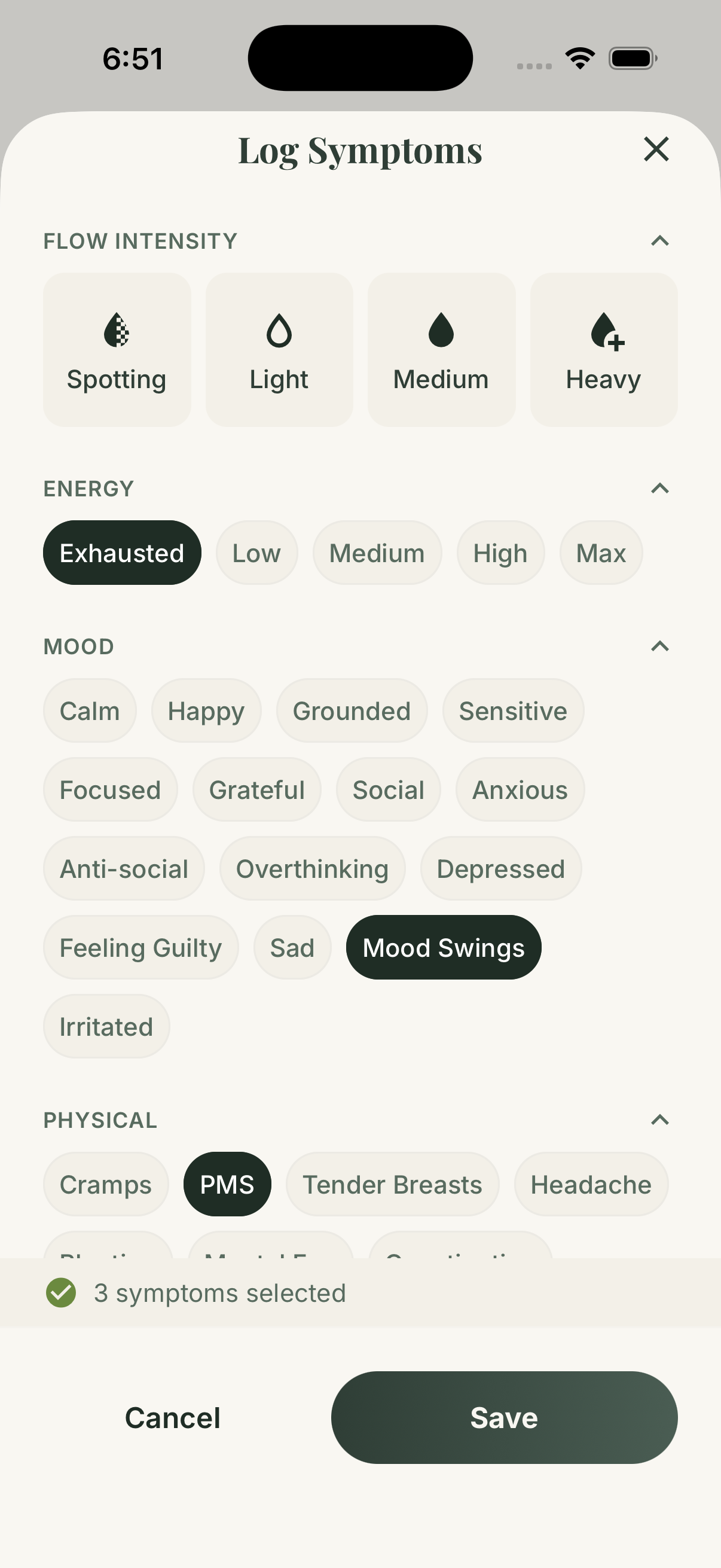
The symptom logging screen supports flow intensity, spotting, energy, mood, physical symptoms, body signals, and notes. You can use it for a single day or edit entries from the calendar when you need to update past information.
Symptom entries are self-reported. They help you remember what happened and view those logs next to cycle timing, period days, and phase context.
The app covers the categories most people want to track: flow and spotting, energy level, mood, physical symptoms like cramps, bloating, headaches, and mental fog, body signals, and free-text notes. That range means most of what changes across your cycle has somewhere to go.
Why symptoms need timing context
A symptom can feel random when it happens once. When you log it with timing context, you may start to notice whether similar symptoms appear around similar points in your cycle.
GetMyMood is built for that kind of pattern support. It helps you keep the details in one place so you do not have to rely on memory at the end of the month. Logs stay useful for spotting patterns even when your cycle timing varies from month to month.
Self-awareness, not diagnosis
Symptom tracking can help you prepare for recurring patterns and describe self-reported history more clearly. It does not tell you what is medically wrong or what treatment you need.
If symptoms are severe, unusual, persistent, or concerning, the safest next step is to contact a qualified healthcare professional.
Your symptom data belongs to you. You can delete individual entries, clear symptom history, or remove all tracking data from inside the app at any time.
How scattered symptoms turn into a pattern
A symptom that feels random once can look different after a few cycles of logging. When bloating, headaches, cramps, mental fog, or skin changes keep landing near the same point, the timing itself becomes the signal.
That record does real work outside the app, too. Clear, dated notes are far easier to describe to a clinician than memory alone, so a recurring symptom becomes something you can show rather than try to recall, especially when it feels severe, unusual, or worth a closer look.
A symptom log is most useful when it captures what happened without forcing you to explain it immediately. Select the closest symptom, add energy or mood if it matters, and leave a note when the day needs more context. After a few cycles, repeated timing can become easier to spot.
The calendar and mood tracker pages show how symptom entries connect with dates and emotional patterns, so you can review more than one signal at a time.
Track how you feel — on iOS or Android
GetMyMood is available for iPhone and Android. Log a symptom in seconds from the home screen, or open the calendar to review and edit past entries.
Tracking physical symptoms and flow alongside mood and energy means your cycle history is in one place when you need it, whether that is for your own awareness or to describe what has been happening to someone who can help.