How it works in GetMyMood
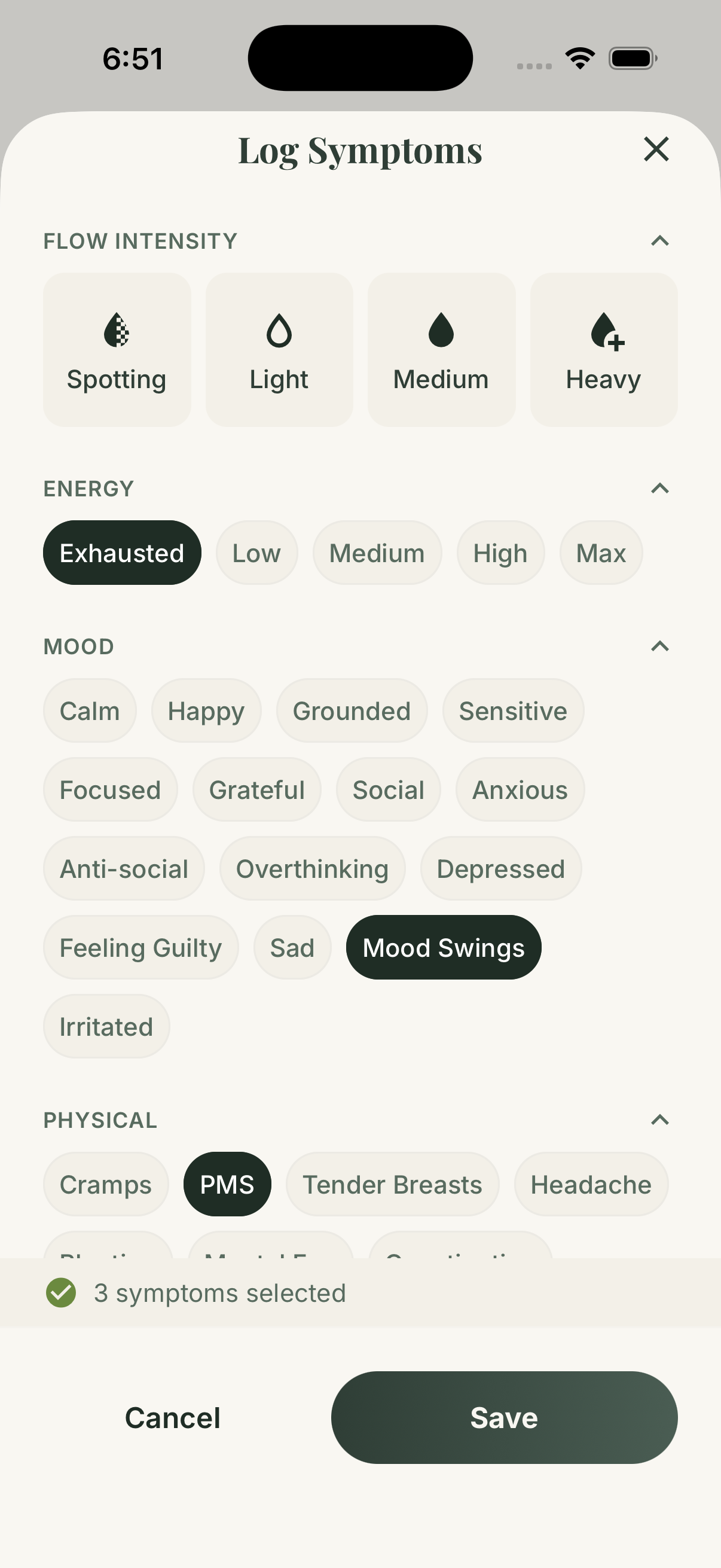
GetMyMood includes mood options such as calm, happy, grounded, sensitive, focused, grateful, social, anxious, overthinking, sad, mood swings, and irritated. You can log mood with energy, flow, physical symptoms, body signals, and notes.
Those entries live alongside period and cycle timing. That means a mood check-in is not isolated from the rest of your cycle context.
Why mood tracking helps with cycle awareness
Mood can shift for many reasons: sleep, stress, relationships, work, health, and ordinary life. Cycle timing can be one useful layer of context, but it should not be treated as the explanation for every emotional change.
Tracking mood with your cycle can help you look for recurring patterns over time. You may notice that some feelings tend to appear before your period, during a certain phase, or around lower-energy days.
Why does my mood change before my period?
In the days before a period, some people notice mood shifts — feeling more sensitive, anxious, tearful, or irritable. These changes may be connected to how hormone levels shift across the luteal phase. Not every mood change in this window is cycle-related. Experiences vary, and sleep, stress, and life events can contribute too.
GetMyMood can help you log how you feel in those days and compare across cycles. Over time, repeated entries may make it easier to see whether a pattern exists for you — and what other factors might be part of the picture. If mood changes before your period feel severe, distressing, or unlike your usual self, contact a qualified healthcare or mental health professional.
Keep the check-in simple
The goal is not to write a long journal entry every day. A quick mood and energy log can be enough to build context across cycles.
When something feels important, notes can add detail. When you only have a few seconds, selecting the closest mood and energy level still gives future you something useful to review.
Your mood entries stay in your account. You can delete mood and symptom data or your full account from inside the app at any time.
Mood patterns over time
One sensitive or low day rarely tells you much on its own. Over a few cycles, repeated check-ins can reveal a rhythm: feelings that tend to arrive before your period, ease after it starts, or cluster around a particular stretch of the month.
Pairing mood with energy makes that rhythm clearer. A tender day on low energy often reads differently than a tender day when you feel rested and focused.
Notes help too, especially when sleep, stress, travel, or a shift in routine is part of what made the day feel the way it did. That context keeps your cycle as a useful layer without treating it as the whole explanation for every feeling.
To track physical symptoms and body signals alongside mood, see the symptom tracker.