How it works in GetMyMood
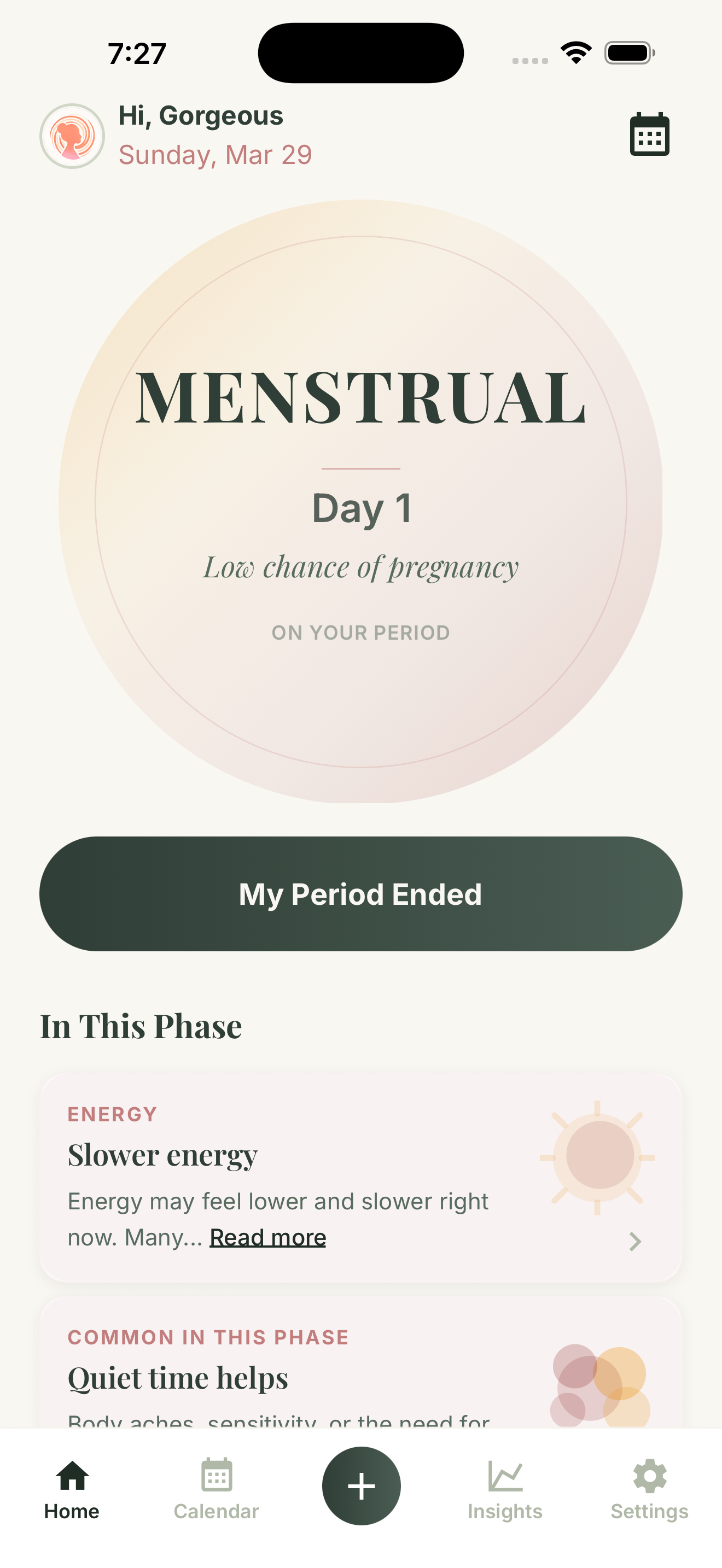
A period date tells you when bleeding started. GetMyMood also keeps the cramps, low energy, and tender moods around it. You can log today as a period day from the home dashboard, mark when your period has ended, and edit period history from the calendar. Period days sit beside cycle phase, symptom, mood, energy, flow, and note entries, so the app is not just a date tracker.
After you enter or log cycle information, GetMyMood can show estimated upcoming period timing. Those estimates are informational and based on the data and settings available in the app. They are useful for planning and awareness, but they are not guarantees.
Why period tracking is easier with context
A period date can answer one question: when bleeding started. Many people also want to know what changed around that time. Was energy lower than usual? Did cramps or bloating show up first? Did mood feel more sensitive, foggy, or irritable around the same part of the cycle?
GetMyMood keeps those entries connected. Instead of asking you to remember whether something happened last month too, it gives your logs a place to live next to your cycle timing.
What you can track around your period
The app supports period days, flow, spotting, mood, energy, physical symptoms, body signals, and notes. You can keep check-ins short when you only need a quick log, or add more detail when a day feels worth remembering.
This can be especially helpful when your period affects more than your calendar. Logging the surrounding signals can make it easier to notice patterns without turning the process into a complicated health project.
What a few cycles of period history can show
After two or three cycles, your logged period days start to add up to something useful. You can see how long bleeding usually lasts for you, whether your start date tends to drift earlier or later, and what often shows up in the days right before it arrives.
Patterns like these are hard to hold in your head and easy to read on a calendar. When the same cramp, energy dip, or tender mood lands near the same point across cycles, you have a clear record to look back on, and a clearer starting point for a conversation with a professional if something feels off.
When period logs become useful
A useful period log does not have to be complicated. Start with the dates that bleeding happens, then add flow, symptoms, mood, energy, or notes only when those details would help future you remember the day more clearly.
Over time, the value comes from comparison. You may notice that cramps arrive before bleeding, energy changes after your period starts, or mood feels different around the same part of more than one cycle.
When you want more context, the calendar page lets you see the same days on a date grid, and the mood tracker and symptom tracker pages show how period days connect with the rest of your GetMyMood history.
You can edit or delete period history any time, from the app.
Log your period in seconds on iOS or Android
Start with a period day today. Add mood, energy, symptoms, or notes when the day feels worth remembering. After a few cycles, the pattern starts to speak for itself.
GetMyMood is available on the App Store and Google Play. Log your first period day in seconds.