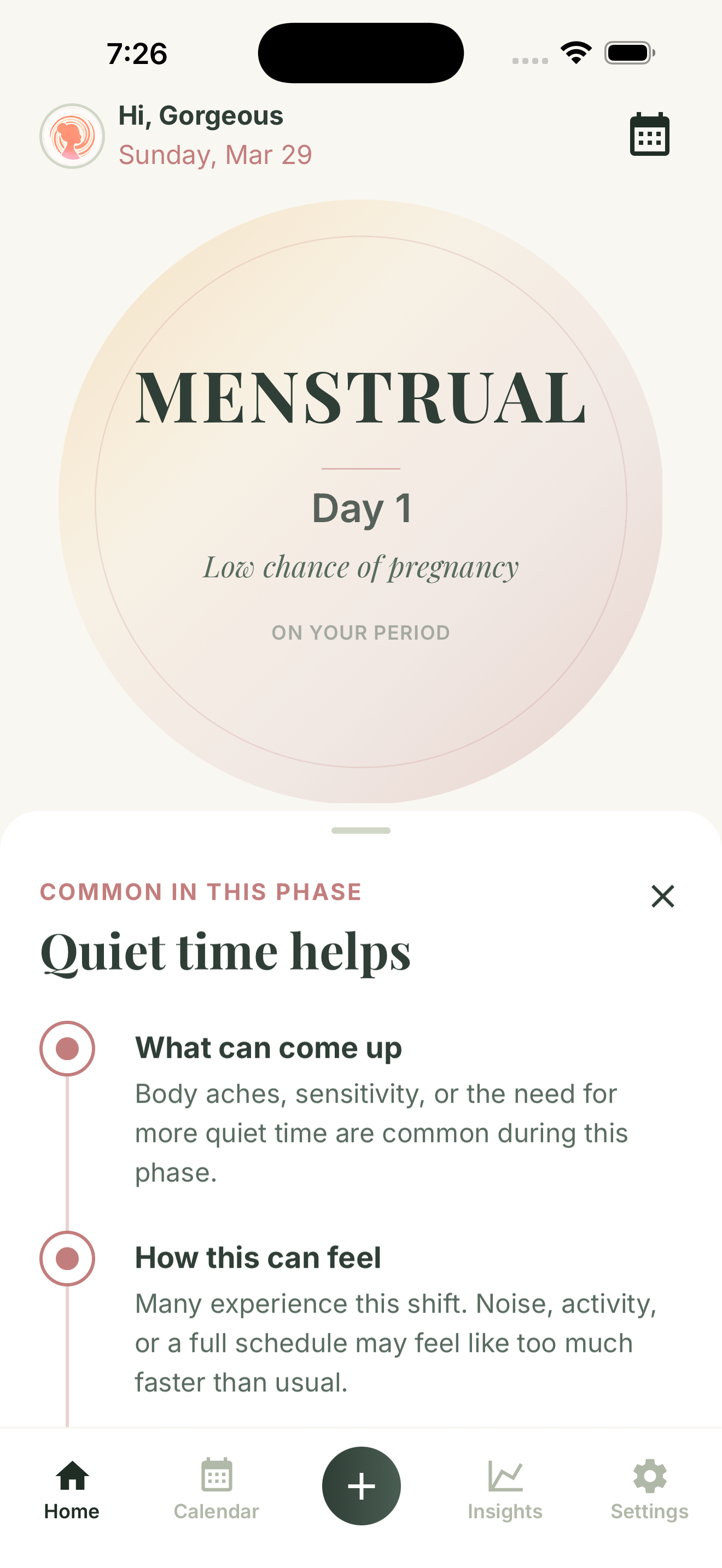
How it works in GetMyMood
GetMyMood shows the current phase on the home dashboard and uses cycle timing to provide phase context in the calendar. The app uses four phases: menstrual, follicular, ovulation, and luteal.
Phase insight cards explain what may be common in the current phase, including energy, body signals, and supportive context. The language is educational, not a set of rules for how you should feel.
The menstrual phase
The menstrual phase is when bleeding is happening. Energy may feel lower and rest may feel more needed than usual during this time. Cramping or pelvic discomfort can be common for many people. How long it lasts and what it feels like varies from person to person and from cycle to cycle.
The follicular phase
The follicular phase begins after your period ends and continues until the estimated ovulation window. Many people notice energy starting to feel a little lighter or focus beginning to return during this phase, though individual experiences vary. It may feel easier to take on things that felt harder during your period.
The ovulation phase
The ovulation phase is the estimated window around ovulation. Some people notice energy or mood feeling higher during this time, while others do not notice a clear shift at all. GetMyMood shows estimated ovulation timing based on cycle information. This is an estimate only and the app does not confirm ovulation.
The luteal phase
The luteal phase follows the estimated ovulation window and runs until your next period begins. It is often the longest phase of the cycle. Mood, energy, and physical sensations can shift during this time. Some people notice more sensitivity, fatigue, or physical symptoms in the days before bleeding starts, but individual experiences vary.
See your current phase in the app
GetMyMood shows your current phase on the home dashboard, alongside your cycle day and estimated next period timing. If you want to see where you are in your cycle right now, the app is available on iOS and Android.
Your data stays on your account and you can delete it any time from inside the app.
Use phase context gently
Phase context can be validating when you notice recurring patterns. It can also be easy to overinterpret. GetMyMood keeps the focus on what you log and what you may notice over time.
If a phase pattern feels severe, unusual, or concerning, it is worth discussing with a qualified healthcare professional.
Your own logs matter more than any phase description
Phase descriptions are a useful starting point, but your own entries are what make them real. Over a few cycles you can see where your experience matches the typical picture for a phase and, just as usefully, where it does not.
That gap is not a problem to fix; it is information. When your energy or mood consistently runs against the usual phase story, your logs reflect what is actually true for you, which is a far better guide than a generic expectation.
This is also true if your cycle is irregular. Phase context is still grounded in what you log. Your own period history and symptom entries give the app its best picture of where you are, not a perfect-looking prediction.