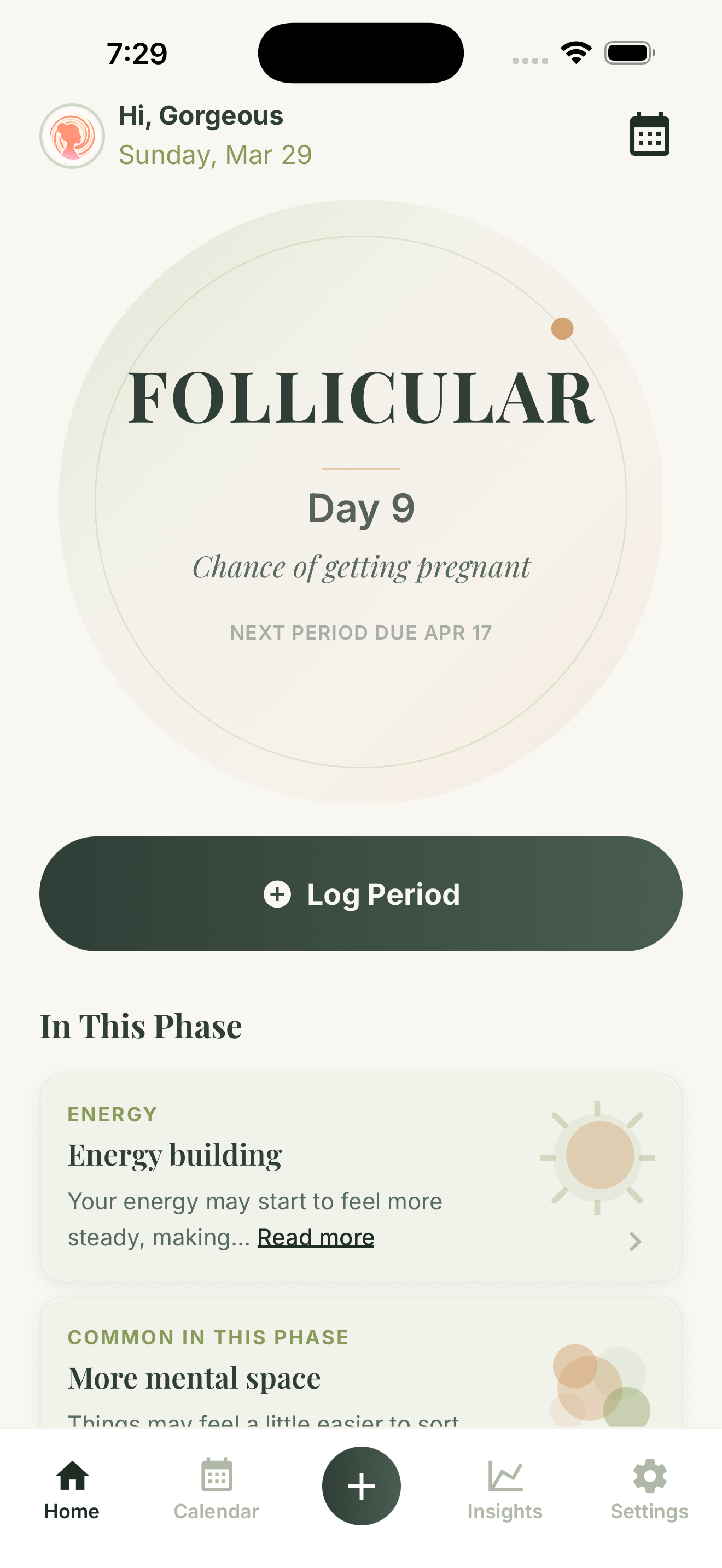
How it works in GetMyMood
GetMyMood gives you a clearer picture of where you are in your cycle: your current cycle day, current phase, and estimated next period timing, all in one place on the home dashboard. The large phase ring is designed to make that context easy to read at a glance, without digging through settings or charts.
GetMyMood can use logged period history or configured cycle averages to estimate upcoming timing. You can also use the calendar to see logged days, symptom days, estimated period days, fertile timing, ovulation timing, and phase context together. If your cycle timing varies, the log still matters — actual period days and symptom entries give the app better context than a prediction alone.
Cycle tracking beyond dates
A cycle tracker is more useful when it helps you connect timing with how you actually feel. GetMyMood lets period days, mood, energy, symptoms, flow, and notes sit in the same cycle-aware experience.
That context can make recurring shifts easier to notice. For example, you may see that energy feels lower before your period, or that certain symptoms tend to appear around a similar phase. The app helps you notice those patterns without treating one entry as a conclusion.
What cycle estimates can and cannot do
Cycle estimates are informational. They can help you prepare, remember what might be coming, and understand where you may be in your cycle. They are not guarantees and they can be less precise when cycle timing varies.
GetMyMood is designed for cycle awareness and self-tracking. It should not be used as contraception, pregnancy detection, confirmed ovulation, fertility treatment, diagnosis, or medical advice.
How cycle patterns become easier to read
A single cycle is a snapshot. A few cycles side by side are where the picture sharpens. Over time you can see whether your cycle length stays steady or varies, and how your energy and mood tend to move from one phase to the next.
That comparison is the point. Seeing the same low-energy stretch or the same lift in focus return around a similar phase can make a week feel less random, and help you plan around it instead of being caught off guard.
When cycle context helps
Cycle tracking is most helpful when it gives you orientation quickly: where you are now, what may be coming next, and what else you logged around similar timing before.
If your cycle timing varies, the log still matters. Actual period days, mood entries, energy levels, symptoms, and notes can give the app better context than a perfect-looking prediction alone.
Use the related period calendar page when you want to see the same timing in a calendar view, or visit the cycle phases guide to understand what each phase means in plain language.
Your logs stay private to you. GetMyMood does not share your cycle or symptom data without your consent. Download GetMyMood on the App Store or Google Play to see where you are in your cycle.