
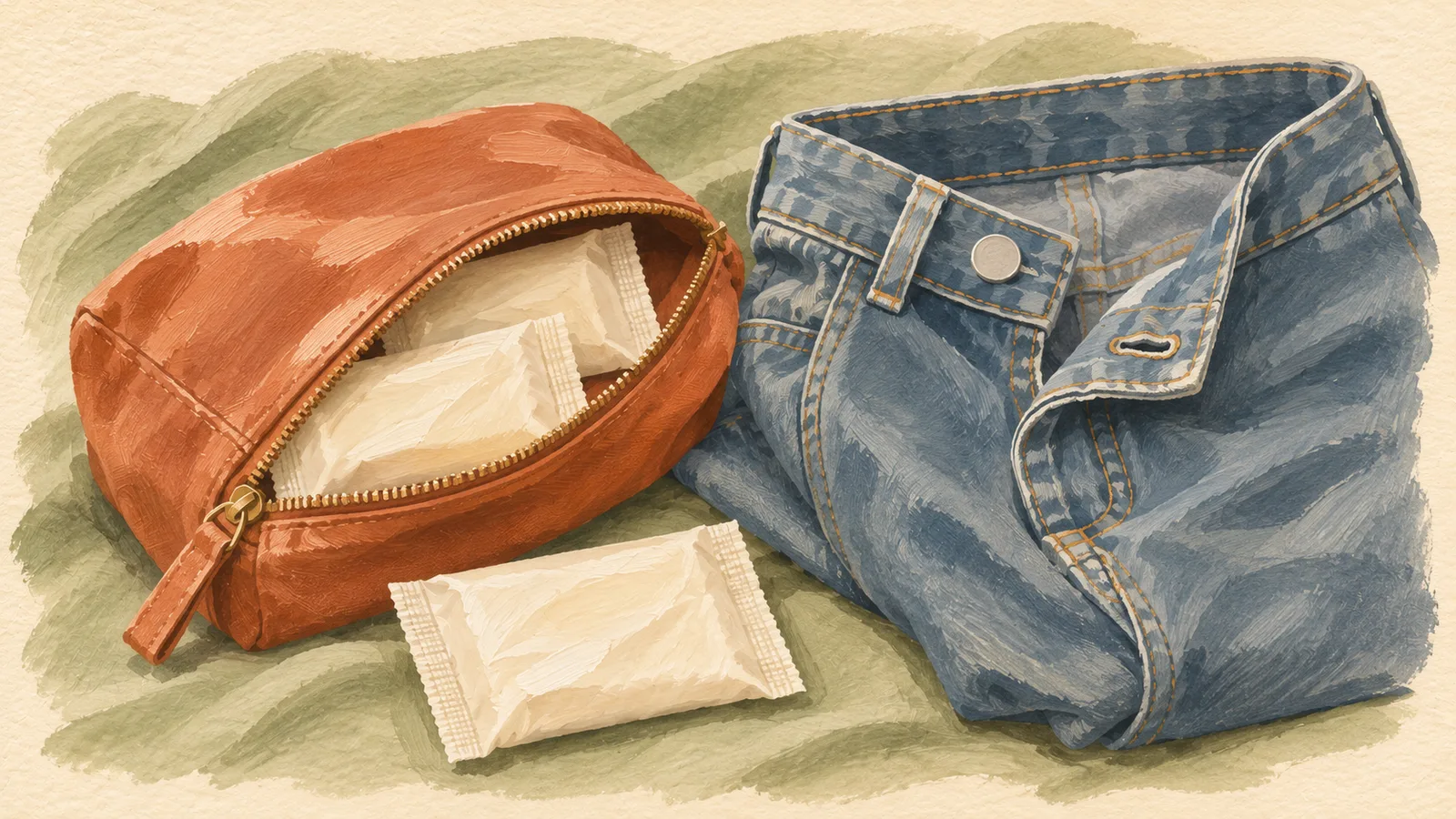
Your jeans feel tighter than they did yesterday. A breakout has appeared along your jaw, and you're more tired than usual. You check your calendar and wonder whether your period is a few days away.
But how much can these changes tell you about when your period will start, and why do they happen?
What's changing in your body
Premenstrual symptoms can appear during the luteal phase, the stretch between ovulation and your next period. Ovulation is when an ovary releases an egg.
By this point, the lining of your uterus has thickened in preparation for a possible pregnancy. After ovulation, the hormone progesterone helps keep that lining in place. If you don't get pregnant, progesterone and estrogen levels fall toward the end of your cycle, and the lining begins to shed. That shedding is your period.
The US Office on Women's Health says these hormone changes may contribute to premenstrual symptoms and may affect some women more than others. Researchers still don't know exactly what causes those symptoms.
Changes you might notice
The Society of Obstetricians and Gynaecologists of Canada (SOGC) and the US Office on Women's Health describe a range of changes you might notice before a period:
- Breast tenderness, which can make a bra or a hug uncomfortable.
- Bloating and fluid retention, which can make waistbands feel snug.
- Headaches, muscle aches and lower back pain.
- Cramps, which sometimes start before bleeding does.
- Bowel changes, either diarrhea or constipation.
- Skin changes, including breakouts.
- Sleep changes and tiredness.
- Appetite changes and food cravings.
Mood can shift too. You might feel more irritable, sad or anxious than usual, sometimes alongside the physical changes.
Why the signs don't work as a countdown
The time between ovulation and your next period varies. The US Office on Women's Health gives a range of about 7 to 19 days. A symptom that appears during that time doesn't tell you how many days are left.
The symptoms themselves can vary too. SOGC notes that they can change from cycle to cycle. You might notice sore breasts one month and a headache the next, or have little discomfort at all.
These changes may suggest your period is approaching, but they can't give you an exact start date. They may also continue once bleeding begins. Cramps, for example, can last into the first day or two of your period. Premenstrual symptoms usually ease within a few days after your period starts.
What to do when you notice these changes
Notice which symptoms are showing up for you and how they affect your day. In GetMyMood, you can log your period days and select the symptoms and moods that match how you feel. There's an optional space for a note, too. Over a few cycles, this can help you see which changes tend to happen before your period.
If you notice that pattern, you may recognize the luteal phase as a time when physical sensations or emotions feel more intense and affect your daily life. When possible, adjust your schedule to how you're feeling, and treat yourself with kindness and compassion during those days.
Choose foods you enjoy and find nourishing, and keep a few easy meals or snacks on hand for days when cooking feels like a lot.
When to talk with a doctor
SOGC and the US Office on Women's Health recommend talking with a doctor or nurse if symptoms are severe or interfere with your usual activities. It's also worth discussing symptoms that persist throughout the month, even if they get worse before your period. A doctor can help you work out whether something else is contributing.
Both sources suggest recording symptoms over a few cycles to help you describe when they happen and how they affect your day.